BROKEN GLASS EVERYWHERE
David Ellis Solo Exhibit, Dec 17 - Feb 28, 2020 NYC
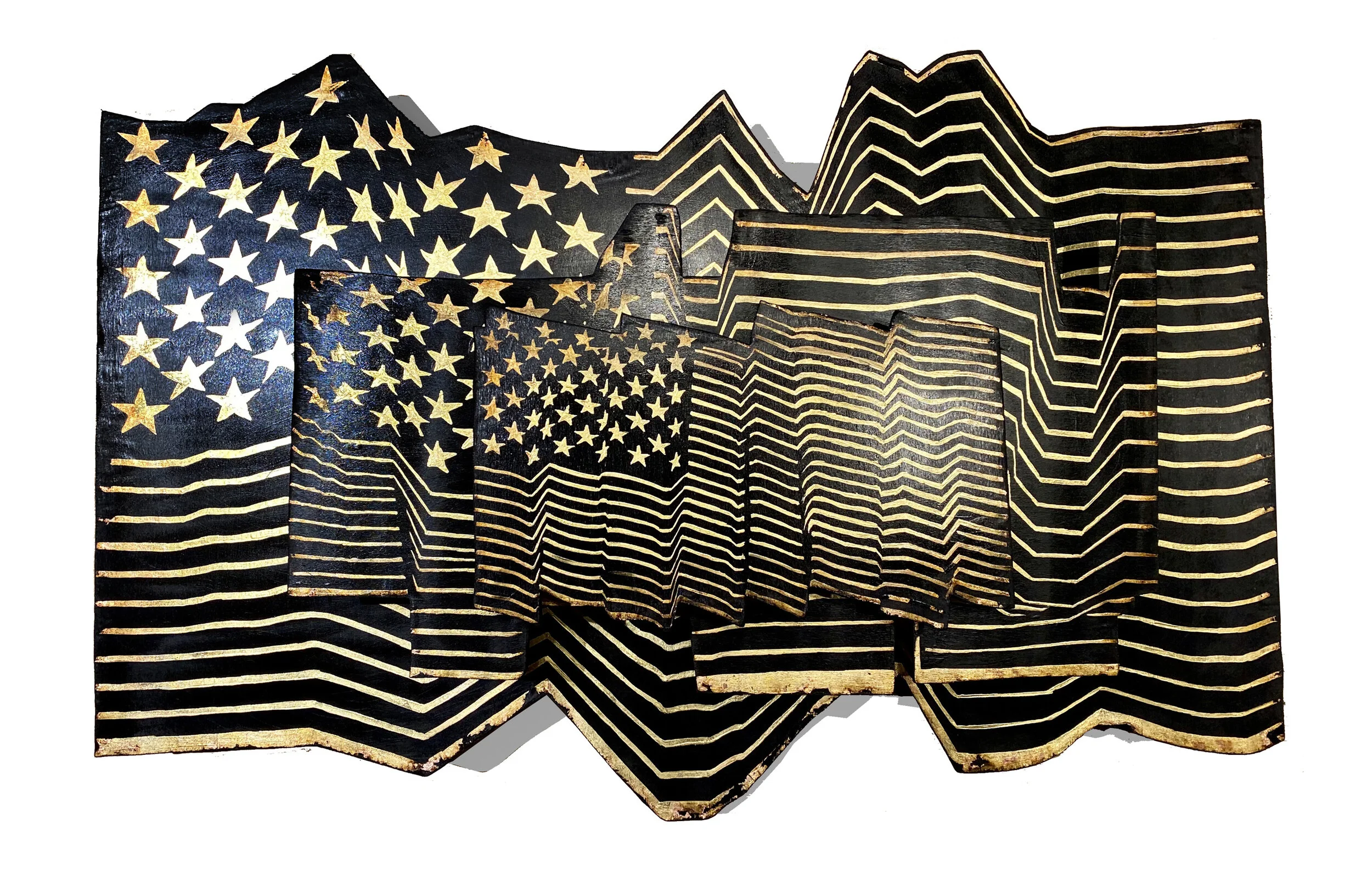
Sonic Flag Suspended In Three Parts
45.25 x 28.25 x .375 in. 2019,
Flashe, gold leaf on charred wooden panel with mounting hardware
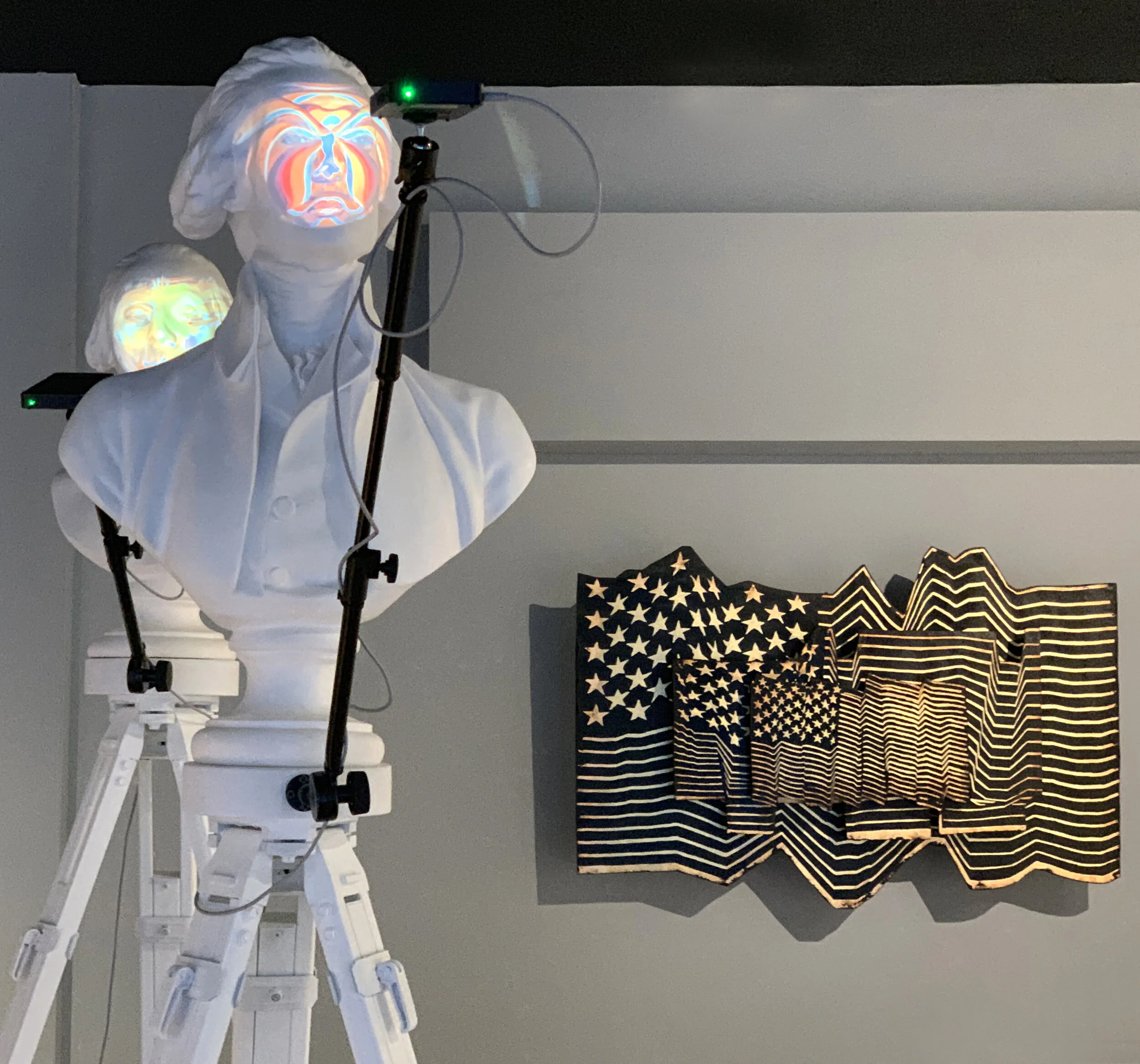
WE PEOPLE
15 x 70 x 15 in. 2019
motion painting sculpture, projector, electronics, cast plaster Washington & Jefferson presidential busts on painted aluminum surveyors tripod
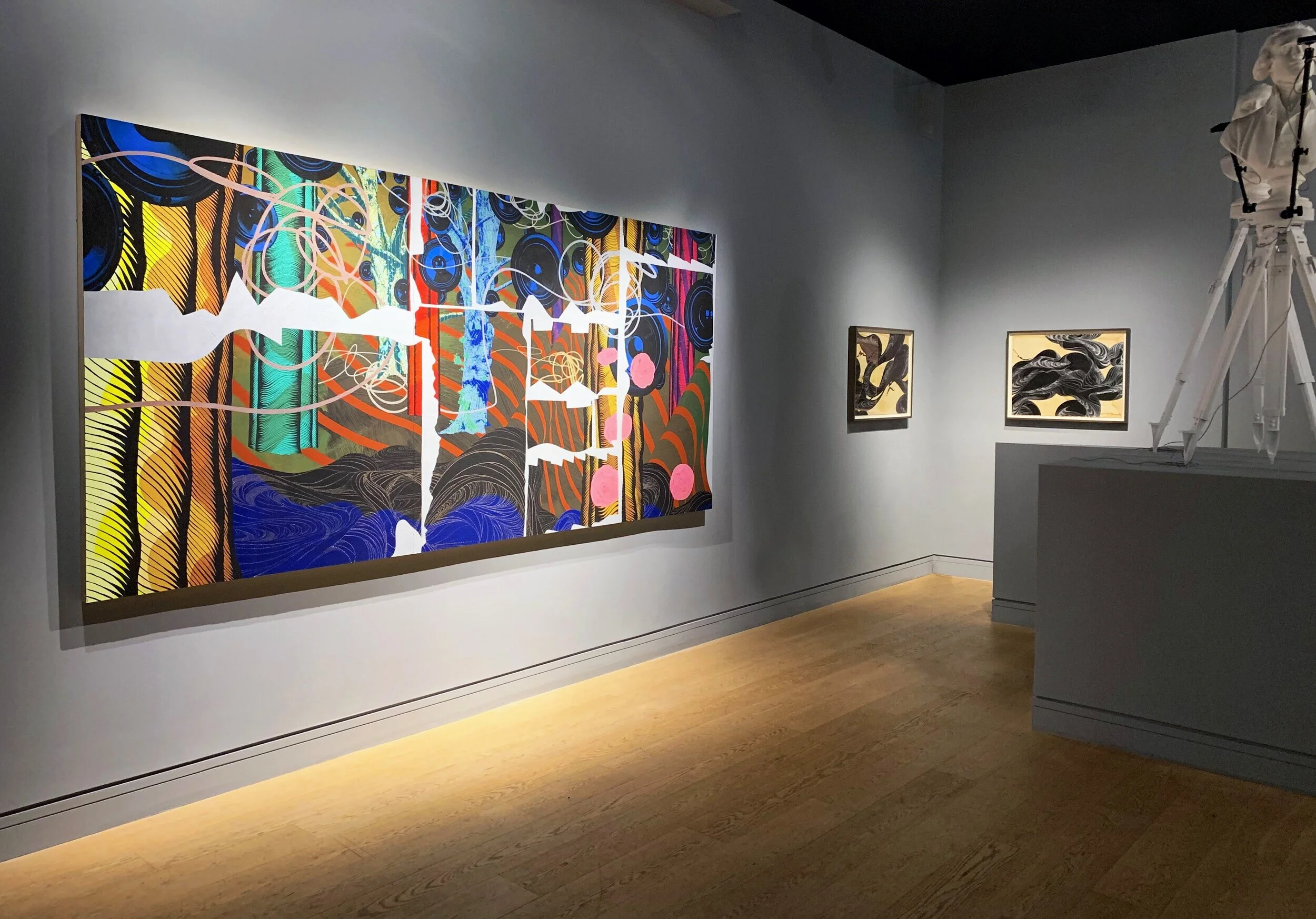
Sonic Landscape 3
60” x 126” x 1.625”. Flashe on wooden panel, 2019
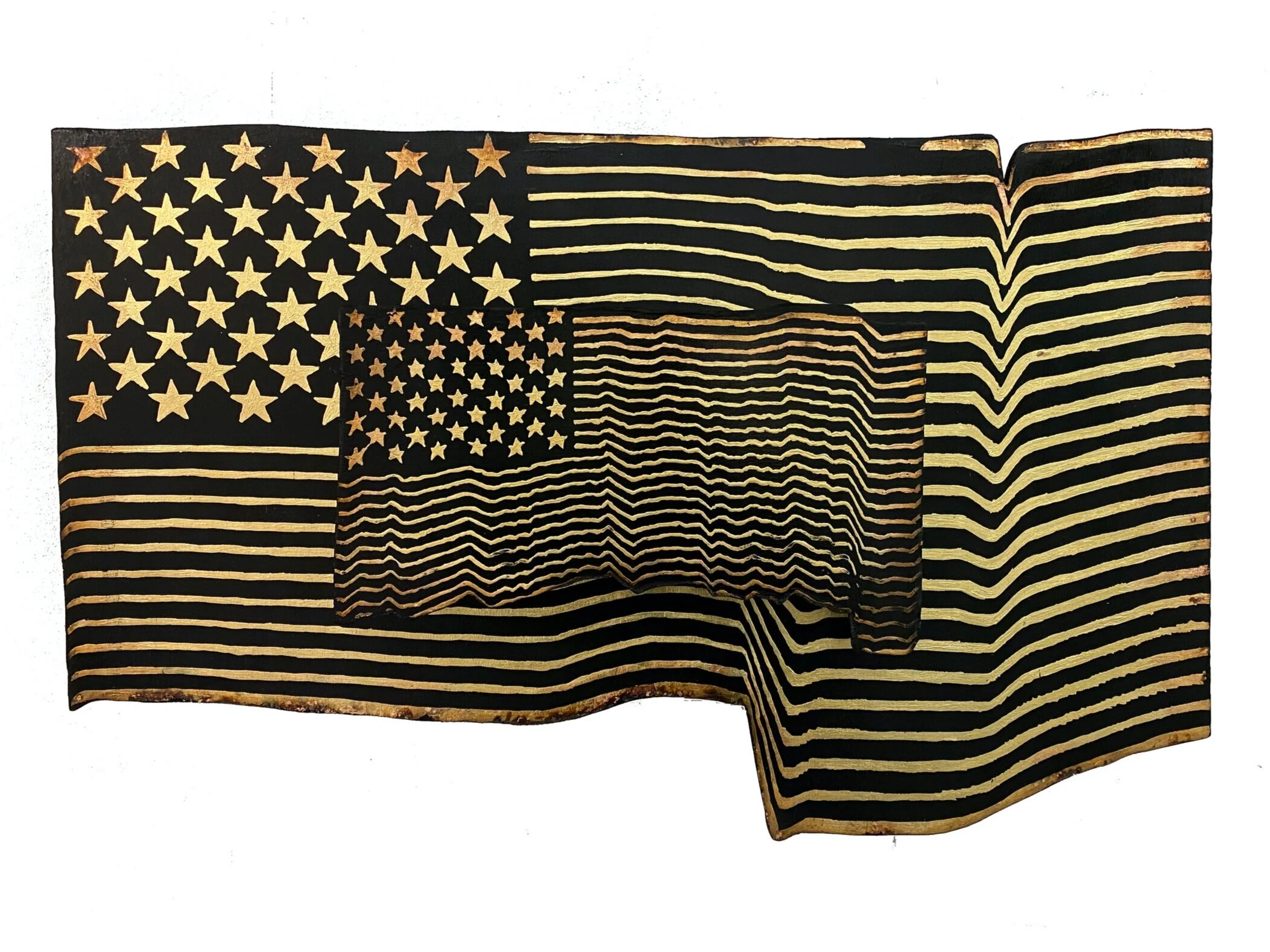
Sonic Flag Suspended In Two Parts
2019,
Flashe, gold leaf on charred wooden panel with mounting hardware
During the current administration, a confluence of events is giving the world as we know it a “shaken, not stirred” sense of urgency. All cities are filled with the majority of their citizens walking around 24/7 with instant media distribution centers and high-quality production resources on their mobile phones.
About a decade ago, I was invited to Charlottesville Virginia, a place that felt to me like any other US music-and-artsy, foodie-filled, fashion-forward, historic sight-seeing, rapidly-gentrifying college town—a relatively do-able commute to both Washington, DC and New York. I was contacted by a very cool young group of locals who had recently started a nonprofit organization called The Bridge PAI. Its mission was to bring communities grappling with growing income disparity and mushrooming rents into spaces where art and music events are produced, often in parking lots and alleyways, as well as community centers, all run out of a tiny industrial building at an intersection of historically black and working class neighborhoods. Their intention was to activate a new kind of roving “Public Square,” one that was fluid and organic and designed to bring neighbors together in safe and stimulating creative ways, in the hopes of engaging new conversations and dialogues between people who might not have other life opportunities to interact.
I, an artist and film maker, along with some musicians, printmakers, bloggers, and designers, came up with a week-long project that involved building a large geodesic dome and projecting motion-painting portraits of various people we encountered in our walks about town. I used a stop-motion camera technique, where I shot a frame every seven seconds while painting a portrait from looking at a photograph of one of these randomly encountered citizens from Charlottesville. Then the next day, I’d come in the studio and without totally buffing it out, I’d paint a new portrait of another person from the neighborhood directly on top of the one I had finished the day before. This went on for a few weeks, and the resulting footage of 10,000-plus digital stills was rendered in a way that allowed me to turn the painted heads from side to side, blink their eyes, and mimic the subtle gestures one might see in a person sitting while getting their portrait painted. This projection sculpture was presented all over town in different locations every night as the sun set and people were generally coming home from work. It was thrilling to play the fly on the wall as people discovered a huge new geodesic face of one of their neighbors pop up and glow in a different spot each evening.
In the first year of a new president’s administration, many things can go wrong. A team of experts, speech writers, coaches, and diplomatic professionals usually work closely with our nation’s top leader to ensure the messaging is inclusive and reflective of the shared goals of all people in our nation and world. We all bear witness to a manic daily news feed, simultaneously streaming analysis, and highlights of both left-and right-leaning chatter. The last three years have been a shock to our collective sanity.
On August 12, 2017, Heather Heyer, was killed and twenty-eight others were injured, requiring surgeries and hospitalization when a group of fringe, mostly White Nationalistic-leaning young men in high school prep jock haircuts and fashions, carrying tiki torches, gathered around a monument of Thomas Jefferson on the Rotunda on the campus of UVA without a permit. The steadily streamed broadcast of this racist and demonstratively aggressive human storm sparked an uncontrollable swell of emotion and reaction that spilled into the streets of a usually quiet shopping and dining part of downtown Charlottesville The following day a well-planned-in-advance protest, March for Diversity, collided with a number of hate groups flocking to the Unite the Right Nationalistic Gun owner activist hornet’s nest and the resulting brawls spilled blood all across downtown Charlottesville.
This peace has no justice. This piece of art is no monument. These people are We. And We are Them. - DE
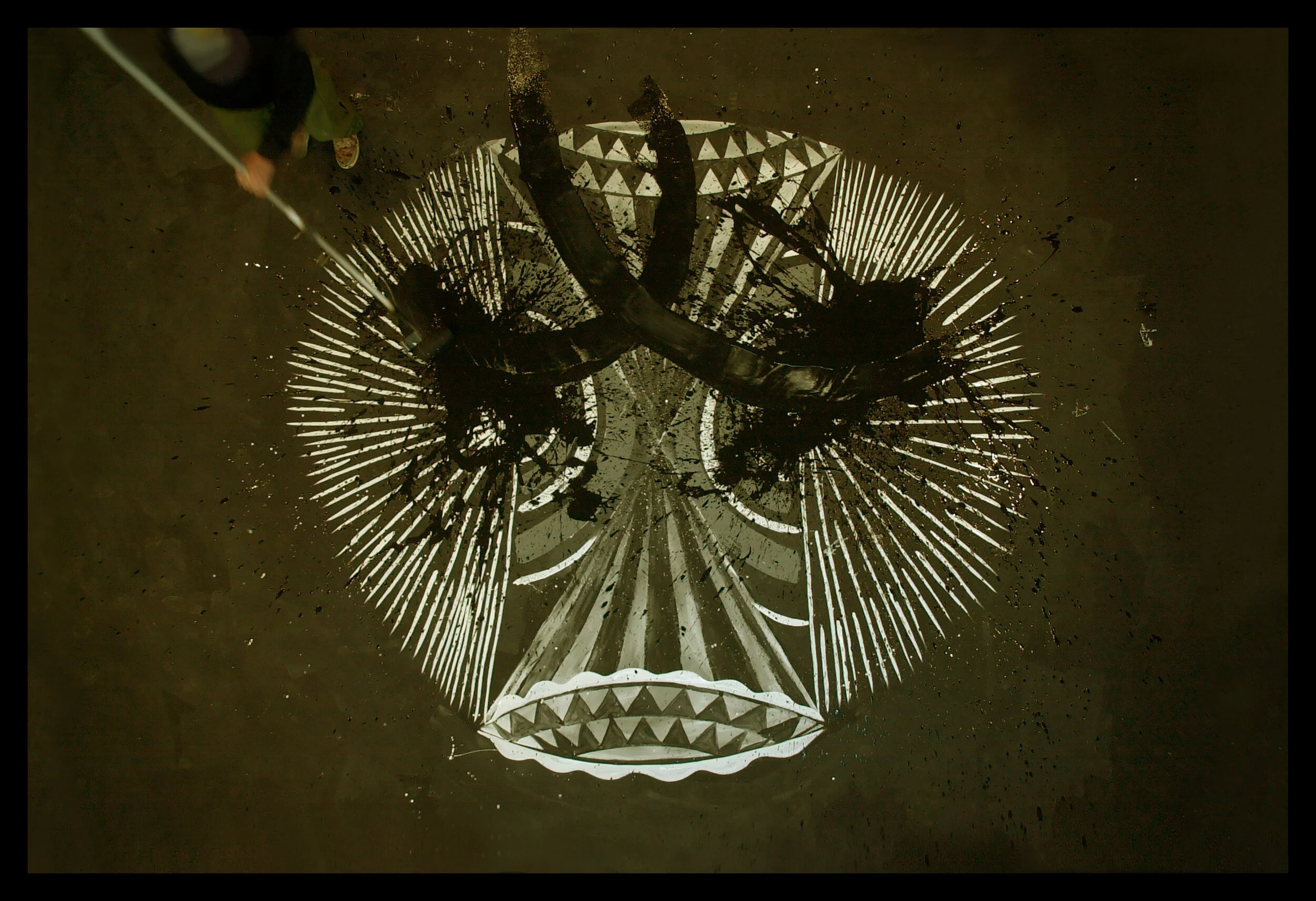
LIBERTAS ( video excerpt )
Stop Motion Painting and Musical Composition by David Ellis
Sonic Landscape 3
60” x 126” x 1.625”. Flashe on wooden panel, 2019
From the beginning of my visual pursuits, a deep and searching fascination with the landscape idiom has been a constant force in the things I make. When I was 9 years old my family built a log house deep in the woods at the end of a long dirt road surrounded by tobacco barns and fields in the dusty North Carolina town of Cameron. Thousands of years back glaciers pushed iron rich, “red clay” soil into a white sandy land mass known as the Sandhills. Abundantly dotted with pine trees, the surrounding towns were historically farmed by Cherokee and Lumbee people, thick handed Scots from the Mountains of Appalachia, African Americans, and migrant working people from Lower North, Central and South America. Towns like Pine Hurst, Southern Pines, Whispering Pines carry on a direct reference to the lumber, pine tar and turpentine producing trees I obsessively climbed as a boy to survey birds-eye vistas of the gurgling creeks, ponds and rivers slicing the tobacco, soy bean and water-melon fields I lived around and worked for pocket money as a young teenaged summer field laborer. It is through this gaze I absorbed Van Gogh’s Sunflowers, Monet’s water lillies and Albert Bierstadt’s Hudson River Valleys. As I cross now into a practice of making work that is non narrative figuration blended with layered Op Art abstraction and conceptually rooted landscapes, I find the desire to translate sound and rhythm in ways earlier artists like Romare Bearden and Matisse executed so invigoratingly well. These paintings, constructed out of dozens of layers of Flashe on wooden panels took about 2 years to complete and mark the beginning of an enthusiastic return to painting. - DE
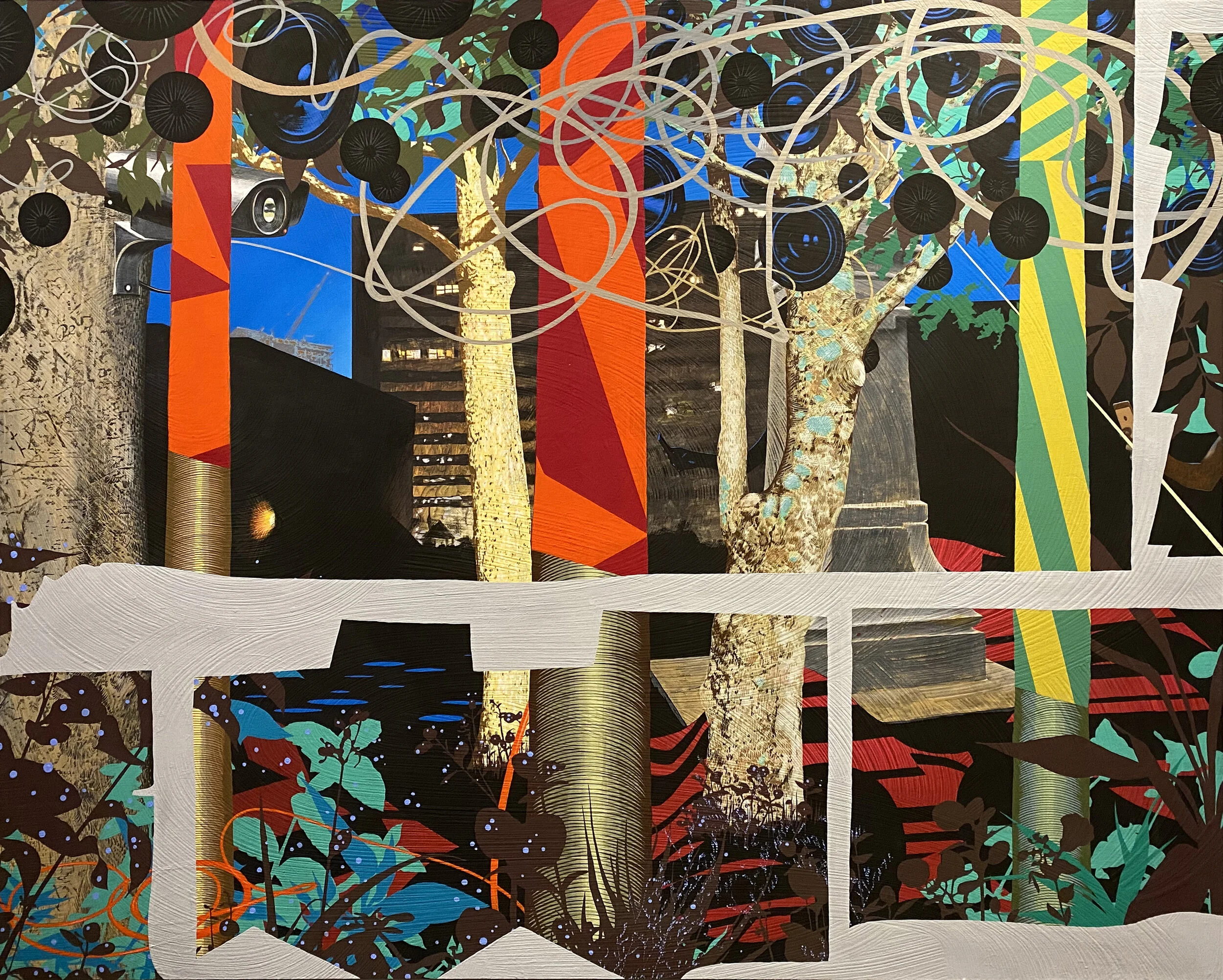
Sonic Landscape 1
60 x 48 x 1.625 in. 2019
Flashe on wooden panel
BROKEN GLASS EVERYWHERE Essay by Carlo McCormick
One can look all one wants at David Ellis’ art, but to really see it you need to listen. We can hear in his paintings, sculptures, assemblages and motion painting animations a sound and fury, rare grooves of fluid complexity, heavy jams and pop perfections, radical riffs and break beats, beautiful bridges and singular syncopations, audio accumulations and delirious dance tracks of ecstatic bliss and esoteric dreams. His is the vox populi of boom box poetics, a pure synaesthetic confection of art and music where the mind is led to wander along free-floating melodies and the booty shakes as if bidden by the irresistible rhythms of a transcendental turntable. The discrete music embedded here subsumes simple visual recognition, charting a cartography of sonic exploration as if the flatness of the picture plane offers a score by which we can swim through a deeper space of multidimensional harmonics and elastic sound waves. In some perpetual motion of cascades and crescendos, slyly coded samples and anthemic refrains unspool time and memory in a concert hall/recording studio/dance floor synergy of individual idiosyncrasies and collective recognition. We may not know all the words, but we still sing along.
Flow gesso, silver enamel on tobacco stained paper
30” X 22”, 2019
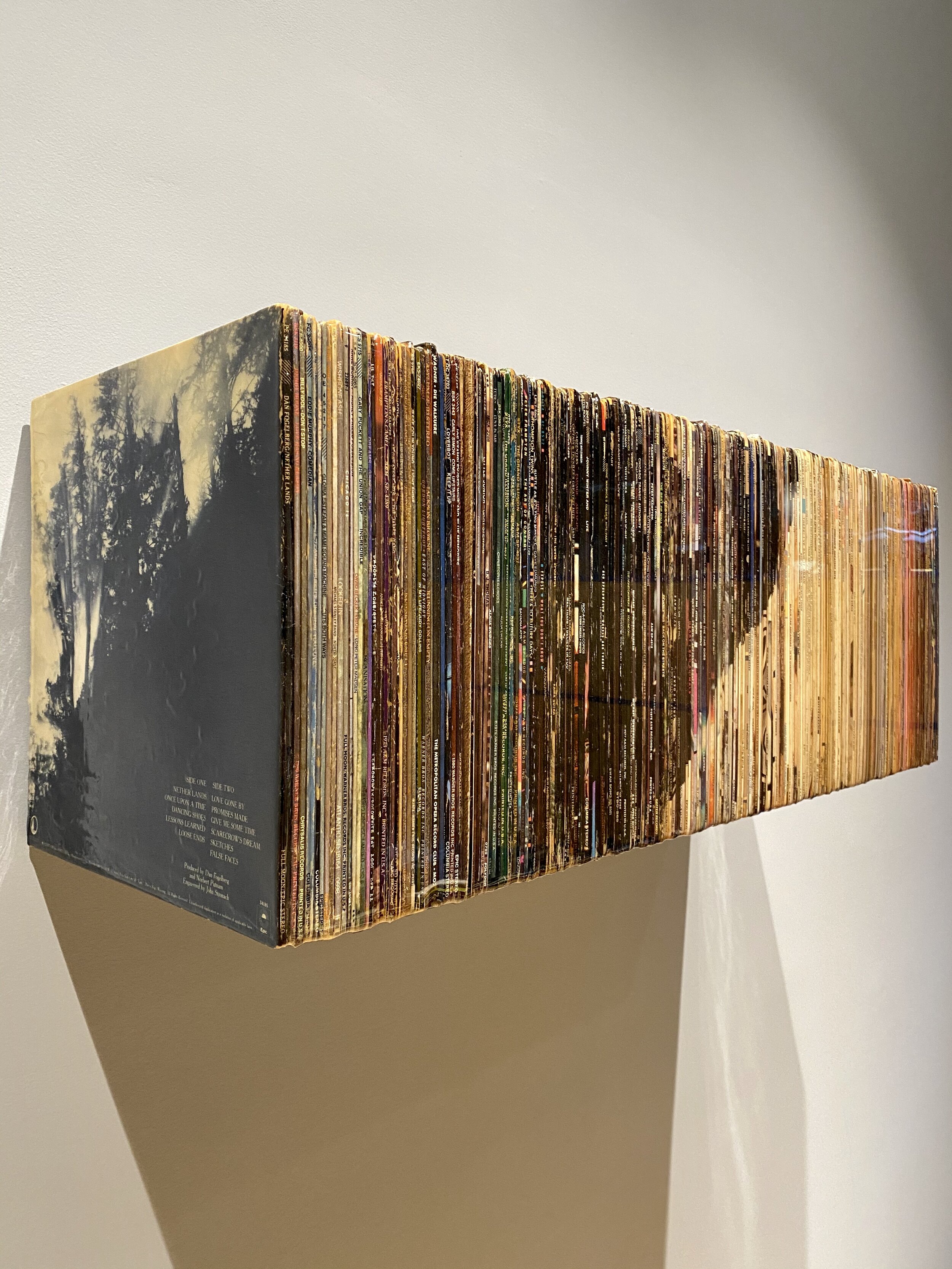
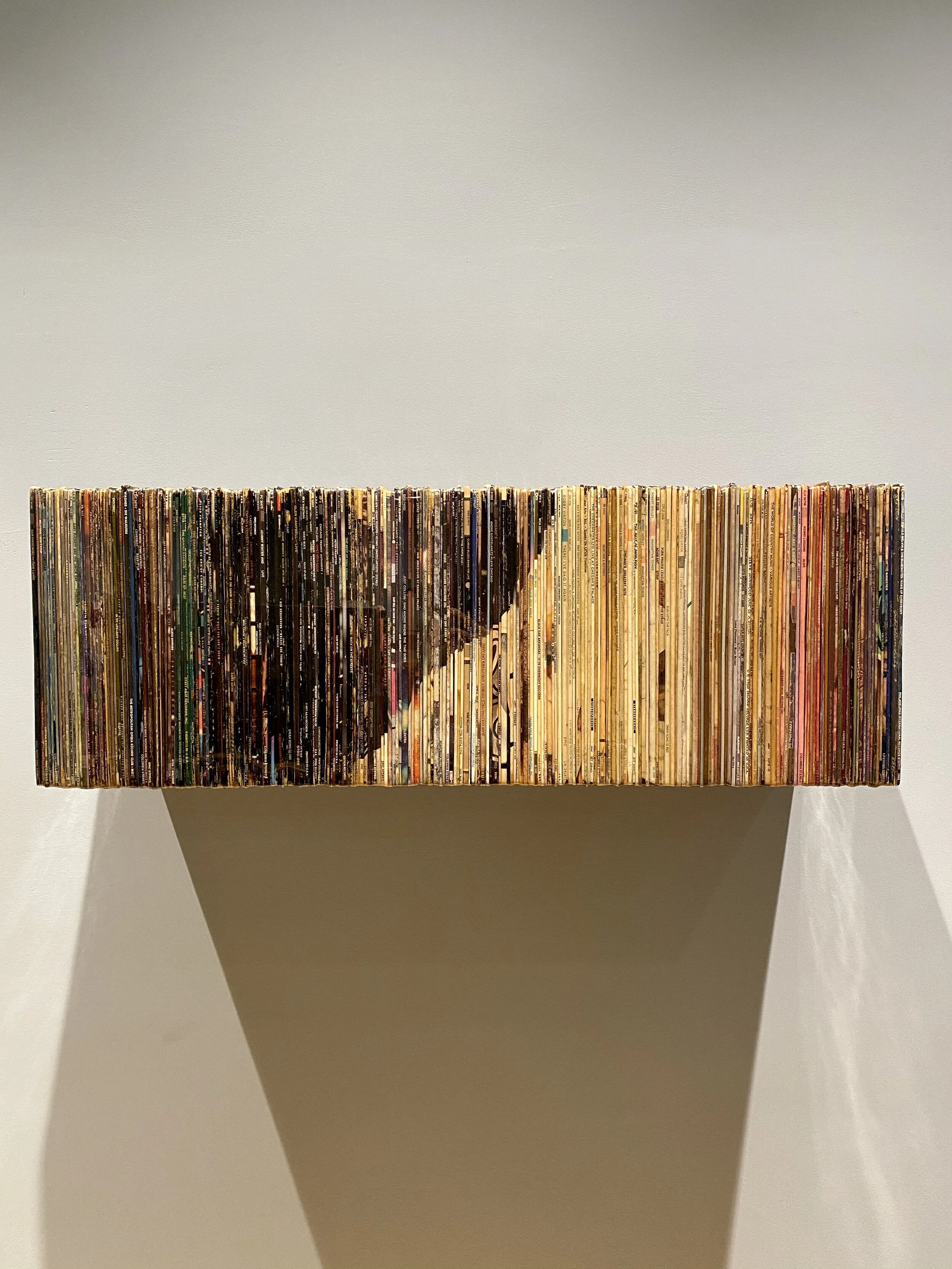
The visual arts cannot transcribe the sound of music, but in Ellis’ alchemical craft we feel the convergence of these expressions into a mutant mongrel mix of sublime hybridity. Here his series of Flow paintings- inscribed as swirling patterns upon the billowing ambient sound clouds of tobacco stain bursts evoking his youth in America’s southern tobacco country- conjure the experiential dynamics of feeling these things somewhere beyond sound and vision, deep in the inner ear where the brain speaks to the heart and the feet move to the invisible. Sonic Landscapes, three in all set forth in this eclectic exhibition, map the colliding geometries of melodic disruption and phonic symmetry of composition as an architecture of the senses, and Ellis reprises his artifact record compendium Recollections with Wake, so named for the only LP visible in the collection as titled by the great Philadelphia Seventies Soul band Harold Melvin and the Blue Notes. It is, as all in this series a memory capsule of archetypal emotional resonance. Startling too is a visionary masterwork by David Ellis called Monument to the Sounds of Roland TR 808 Drum Machine, where the intangibility of the new digital paradigm finds a palpable form, making manifest the disembodied essence of electronic impulses in a spiritual iconography of transpersonal awakening. The beat goes on.
David Ellis’ pictorial musicology is a symphony of individual elements brought together in unison, and is never so much about the sparkling solos as it is about the community of players and audience, a more profound sense of togetherness far deeper than any virtuosity. It’s all about call and response, the chorus of togetherness assembled as a kind of infinite combo. It’s a highly social art of implicit political consequence, the voices melded in compound harmony, brought together as a collective commonality the way the sonically induced synth wave forms that make up the stripes of his suspended flag of gold leaf and charred wood constitute a different and wholly more suitable form of allegiance, what P Funk aptly called One Nation Under A Groove. And there it is, We People, bold and beautiful as a b-side gem, the face of the many reflected in the recognition of our forbearers, the citizens of Charlottesville, a city wracked by the violence of racial grievance, projected on the busts of Washington and Jefferson, like a hymn of infinite sorrow and gradual healing, a world of difference brought together in elegiac euphony. Like the high laughter of children on the playground and the low thumping of a deep bass line, the sound carries beyond its source, drifting far for those who are willing to listen across the silence- it may sound like world music but is the rather more the music of the world.
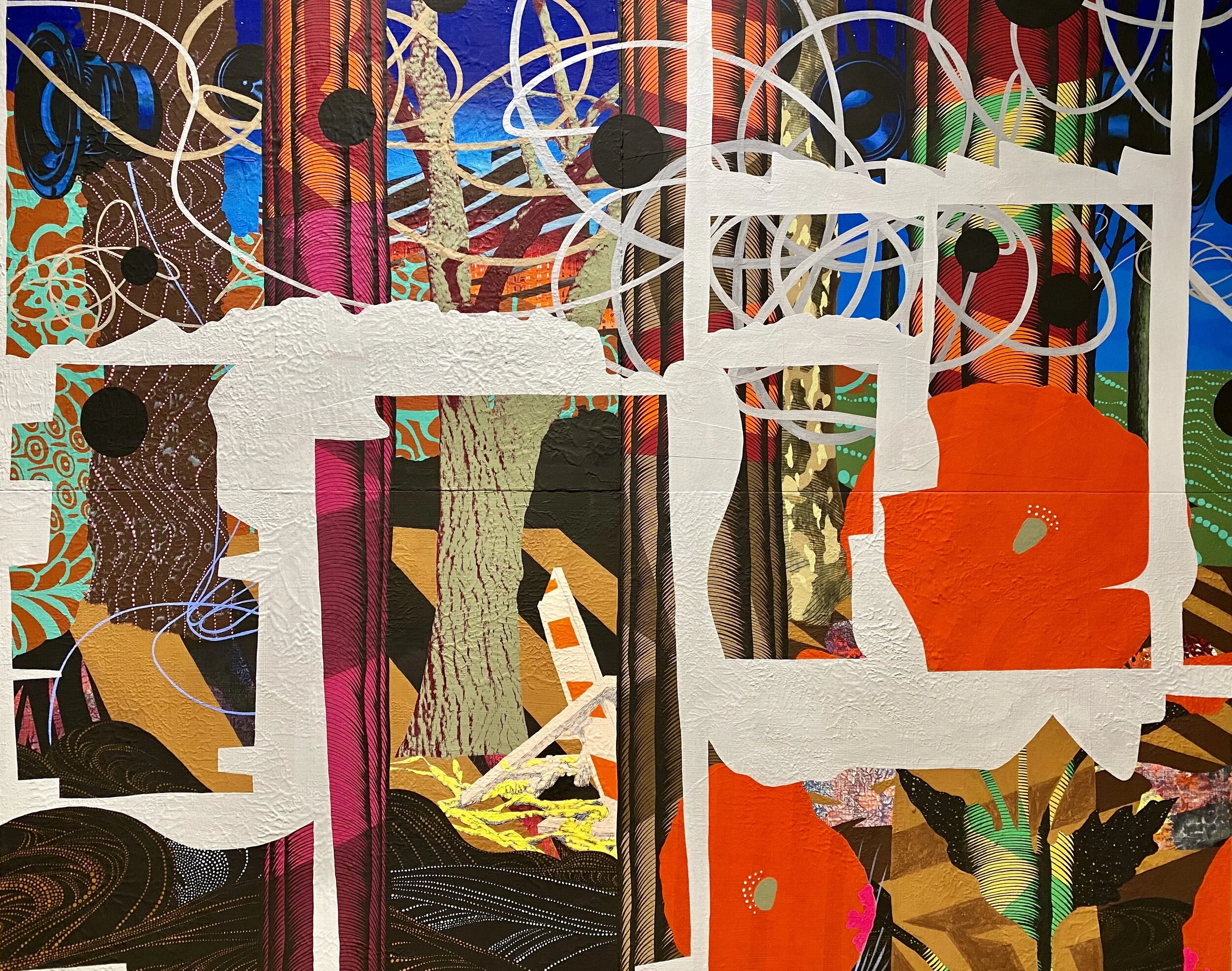
Sonic Landscape 2
60 x 48 x 1.625 in. 2019
Flashe on wooden pane
l